I am writing this from an unusual place.
Not my usual desk inside. Not hunched over my laptop at some odd hour when the house is finally quiet.
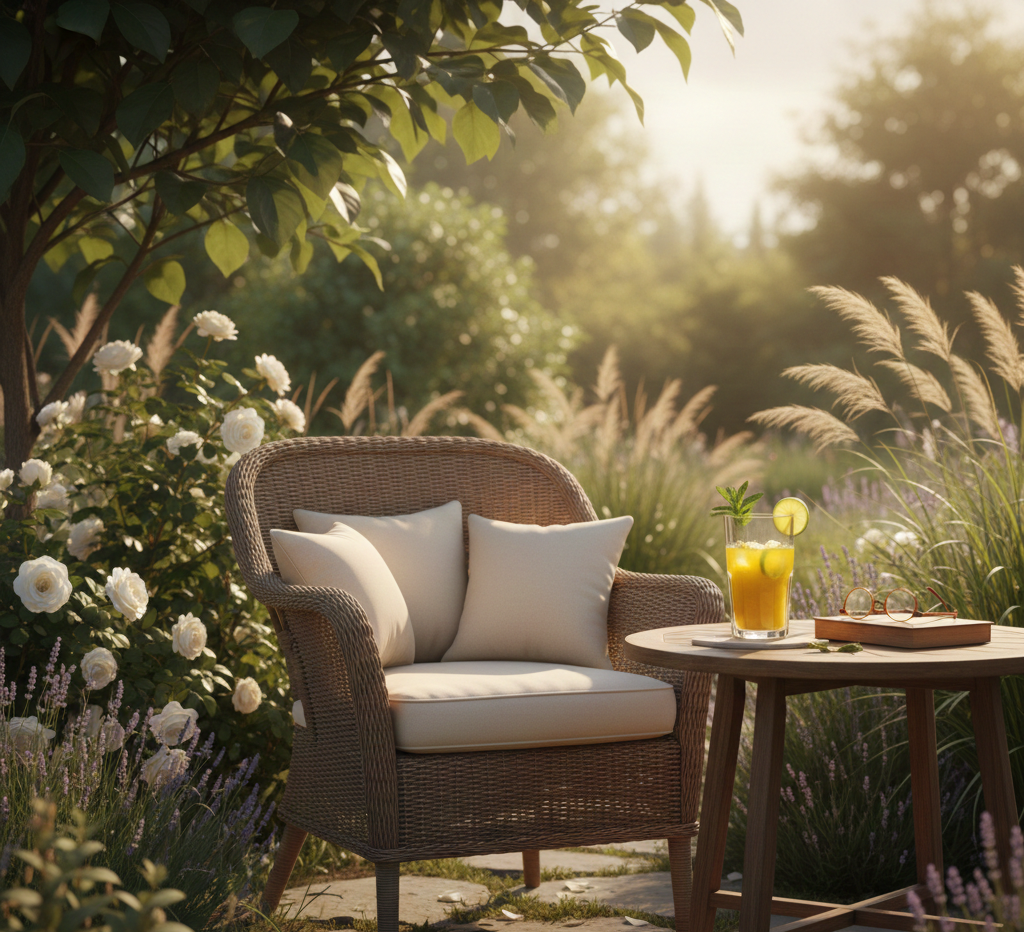
I am sitting outside in our garden on a sunny Sunday afternoon, a glass of mango juice beside me, a gentle breeze reminding me that I am actually here. Present. Still.
And that is the unusual part.
For the first time in a very long time, I am home during this transition from one year to the next.
The Festive Period I Did Not Plan
Normally, this time of year is motion. Travel with family. Visiting relatives. Moving from one place to another. Coming home only after the New Year has already started, exhausted from the obligations and celebrations and constant movement.
It is not a bad thing. Family matters. Traditions matter.
But this year, circumstances; a combination of family situations and work commitments kept me here. At home. In one place. As 2025 winds down and 2026 waits just around the corner.
And something unexpected happened.
I got to sit still.
The Empty House and the Full Quiet
Our daughter went to visit her grandparents for a few days, which gave my wife and me some rare time to ourselves.
There is this funny irony about toddlers: when they are with you, they are demanding, wonderfully, exhaustingly demanding. You find yourself yearning for just a few hours of peace. A break. Some breathing room.
And then the moment they leave, the house feels impossibly empty.
All you think about is them. The warmth they bring. The chaos that somehow makes a home feel alive.
But in that quiet emptiness, something valuable emerged: space to reflect.
Not rushed reflection. Not “I should probably think about my year” reflection squeezed between activities.
Real, unhurried, sitting-in-the-garden-on-a-Sunday-afternoon reflection.
The Questions That Finally Had Room to Breathe
Last week, I wrote about the questions we avoid asking before the year ends. Questions about what 2025 quietly taught us. What drained us. What worked. What we are carrying forward by default rather than by choice.
This week, this rare, still week at home, I finally sat with those questions.
Not to tick a box. Not to produce content.
But because I actually had the space to listen to what they were asking.
And in that stillness, I began planning for 2026. Not in the usual way. Not with the usual goals.
Because of one sentence that changed everything.
The Quote That Redirected My 2026
I came across a line recently that stopped me mid-scroll:
“Optimize for your desired lifestyle, not your desired title.”
It was in James Clear’s newsletter—specifically this edition—one of the few I actually read consistently.
I read that sentence again. And again.
And I realized: I have been doing it backwards.
The Trap of Title-Focused Goals
Think about how most of us approach our annual goals.
We say things like:
- “I want to get promoted to Senior Manager.”
- “I want to grow my business to seven figures.”
- “I want to be recognized as an industry leader.”
- “I want to own a bigger house, drive a better car, have a more impressive title.”
There is nothing inherently wrong with these goals. Ambition is not a vice. Growth is not shallow.
But here is what Clear’s quote made me confront:
We chase titles without asking if we even want to live the life that comes with them.
The Senior Manager position might come with more stress, less time with your daughter, evenings consumed by emails, weekends swallowed by “urgent” projects.
The seven-figure business might demand 80-hour weeks, constant travel, relationships strained by your absence.
The bigger house might mean a longer commute, higher expenses, less financial margin for the things you actually enjoy.
We optimize for status. For labels. For what society calls success.
And then we arrive, exhausted, stretched, disconnected and wonder why the achievement feels hollow.
What Optimizing for Lifestyle Actually Means
Clear’s insight is simple but radical:
Start with how you want to live. Then work backwards to find a path that gets you there.
Not: “What title do I want?”
But: “What does a day in my desired life actually look like?”
For example:
- Do you want to lecture at a university one day? Start guest speaking now, even if it is just once a quarter.
- Do you want to write a book? Start writing weekly, even blog posts to build the muscle.
- Do you want to live on a farm when you retire? Start learning about sustainable agriculture, visit farms, connect with that world now.
- Do you want more time with family? Design your career around flexibility, not just salary.
- Do you want to travel extensively? Build skills that allow remote work or consulting.
The question is not “What impressive thing can I achieve?”
The question is “What life do I actually want to live and what small steps can I take towards it now?”
How This Changed My 2026 Planning
Sitting in my garden this week, I did something different.
Instead of asking “What do I want to accomplish in 2026?” I asked:
“What do I want my life to feel like in 2026? And in 2030? And beyond?”
I pictured myself not with a bigger title, but with a different rhythm. More mornings like this one; unhurried, present, able to think. More time building things that matter to me, not just things that look good on a CV. More capacity to be fully there when my daughter needs me, when my wife needs me, when I need myself.
And then I asked: “What decisions would get me closer to that life?”
Suddenly, my 2026 goals shifted.
Some remained: Yes, I still want to take care of my physical health (exercise more consistently). Yes, I still want to improve my communication skills (especially verbal: I have relied too heavily on writing). Yes, I want to invest more intentionally in my family.
But new priorities emerged:
- Starting another construction project, not because it impresses anyone but because I enjoy envisioning something and then watching it come to life exactly as planned.
- Going on a road trip with my wife. It has been far too long.
- Launching a new project outside my comfort zone, but one that aligns with the life I want to live five years from now, not just the title I might want next year.
These are not resume goals. They are life goals.
And that is the difference.
The Invitation for Your 2026
As you sit on the edge of this new year, I want to offer you the same question that has been sitting with me:
Are you optimizing for a title, or for a lifestyle?
Are your 2026 goals taking you towards the life you actually want to live, or towards a version of success that might leave you exhausted, isolated, and wondering why you are not happier?
There is no judgment here. Just an invitation to pause and ask.
Because the painful truth is this: You can achieve every goal on your list and still feel like you are living the wrong life.
But if you start with the life you want—the rhythm, the relationships, the quiet satisfactions—and build your goals around that?
You might arrive somewhere that actually feels like home.
My Wish for You
As 2025 closes and 2026 opens, I wish you clarity about what you are actually chasing.
I wish you the courage to optimize for your desired lifestyle, not just your desired title.
And I wish you a year where, when you look back twelve months from now, you recognize yourself in the life you have built.
Not because it looked good. But because it felt true.
Here is to 2026. May it be the year we stop chasing labels and start living deliberately.
What does your desired lifestyle actually look like? And what is one small step you can take towards it this week?
Leave a Reply